

Working together
Getting started
If you’re considering therapy, please get in touch and we can arrange a free 20-minute conversation via Zoom or telephone.
During this session, we can discuss what brings you to therapy, what you’re hoping for from the process, and any questions you may have about me or the way I work.
It also provides an opportunity for both of us to get a sense of whether working together feels like a good fit.
How many sessions do I need?
People often ask how many sessions therapy involves. There is no single answer. Some people attend for a relatively short period, while others find longer-term or open-ended therapy more helpful.
We can discuss this together and review things regularly as our work develops, reflecting on how things are going and whether there are any concerns, questions, or adjustments you’d like to make. These conversations often become an important part of the therapeutic process in their own right.

What happens in the first session?
There is no single ‘right’ way to begin therapy. Whether you arrive with a clear sense of what you want to explore or no idea at all, we’ll find a starting point that feels meaningful and manageable. Some people come to therapy with specific goals in mind, while others prefer to remain open to what emerges through the process. We can work in whichever way feels most helpful for you.
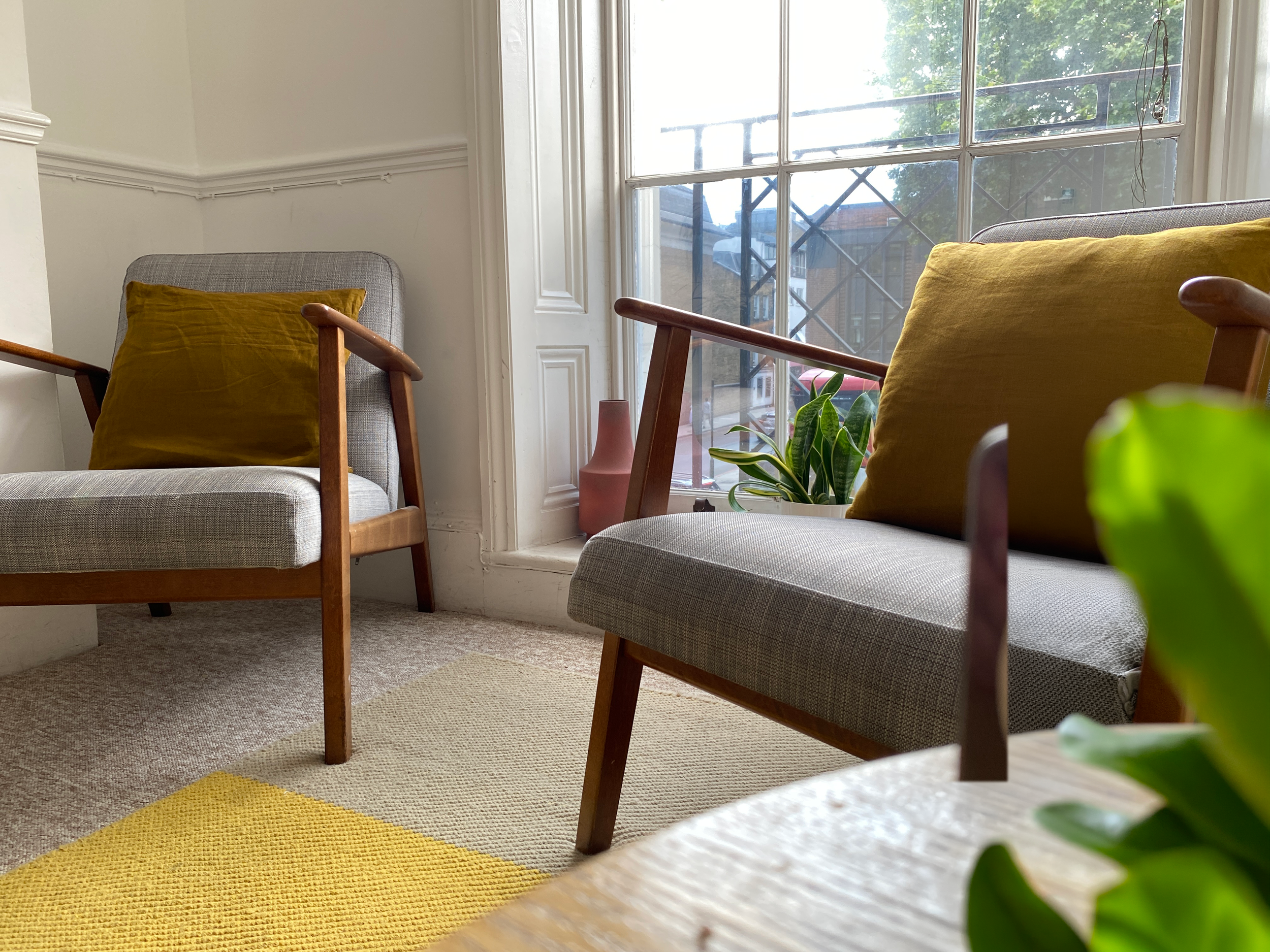
Sessions are 50 minutes and take place weekly. For in-person therapy, we’ll meet in my room in Islington, London (see Location and Fees for details). Online sessions take place via Zoom.
When is the right time to end therapy?
While there is no simple answer, this is something we can think about together as our work progresses. Whether you feel you no longer need therapy, wish to pause, or decide that I’m no longer the right therapist for you, these decisions can always be discussed openly.
If you’d like to find out more or arrange an introductory conversation,
please get in touch.